Newsletter
Subscribe to our newsletter for the latest updates, exclusive offers, and insights. Don’t miss out—sign up now!


AI is no longer just a set of tools you occasionally use. It is becoming an active participant in how work gets done. From drafting emails to analyzing complex data, AI now works alongside people as a collaborator rather than a passive system.
This shift from tools to teammates is changing daily workflows across industries. Businesses are not just adopting AI to save time. They are redesigning how teams think, plan, and execute work.
For companies like Venuras, which combine design, technology, marketing, and content services, this evolution opens up new possibilities. AI is not replacing creativity or strategy. It is enhancing both.
Let’s break down what this shift really means and how it is reshaping modern work.

AI in daily workflows refers to the integration of artificial intelligence into everyday tasks and processes. Instead of being used occasionally, AI becomes part of the routine.
It can help write content, generate designs, automate customer interactions, and analyze performance metrics in real time.
Early AI tools focused on automation. They handled repetitive tasks like data entry or scheduling. Today, AI goes further. It supports decision making, suggests ideas, and even learns from user behavior.
This transition marks a major shift. AI is moving from being a background system to a visible collaborator.
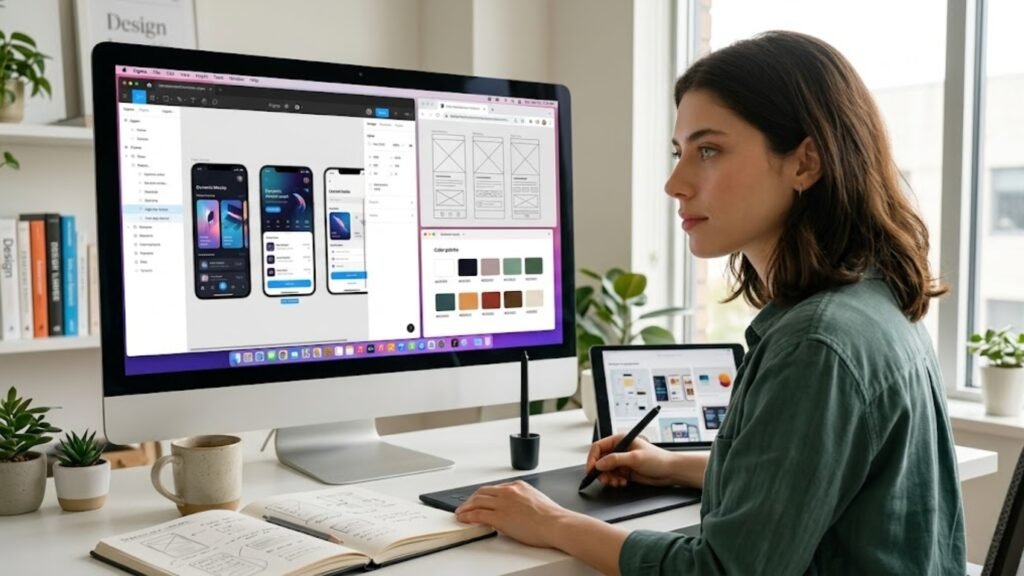
AI is changing how designers approach their work. Instead of starting from scratch, designers can use AI to generate concepts, layouts, and variations quickly.
Faster Ideation and Prototyping
AI tools can create multiple design drafts in seconds. This speeds up brainstorming and allows teams to explore more ideas without increasing workload.
Enhanced Personalization
AI can analyze user behavior and suggest design changes that improve engagement. This helps create more user-centric experiences.
For a company like Venuras, this means delivering UI and UX solutions that are both creative and data-driven.
AI is becoming a valuable partner for developers and IT teams.
Smarter Coding Assistance
AI-powered coding tools can suggest code snippets, detect bugs, and improve efficiency. Developers spend less time on repetitive tasks and more time solving complex problems.
Predictive Maintenance and Security
AI can monitor systems and identify potential threats before they become serious issues. This is especially useful in cybersecurity and cloud environments.
Marketing workflows are seeing one of the biggest transformations.
Content Generation and Optimization
AI can draft blogs, social media posts, and ad copy. It also suggests improvements based on SEO and audience behavior.
For example, marketers can use tools like SEMrush to analyze keywords and optimize content strategies.
Data-Driven Campaigns
AI helps marketers understand customer behavior and predict trends. This leads to more targeted and effective campaigns.
AI is making content production faster and more accessible.
Video and Audio Editing
AI tools can automate editing tasks such as cutting clips, enhancing audio, and adding effects. This reduces production time significantly.
Animation and Visual Effects
AI can generate animations and visual elements, making it easier to create engaging multimedia content.
AI is transforming how teams communicate and create written content.
Streamlined Copywriting
AI can assist in drafting emails, reports, and articles. Writers can focus on refining ideas rather than starting from scratch.
Translation and Localization
AI-powered translation tools enable businesses to reach global audiences more effectively.
Tools like DeepL provide accurate translations that maintain context and tone.

AI reduces the time spent on repetitive tasks. Teams can focus on strategic and creative work.
AI provides insights based on data analysis. This helps businesses make informed decisions quickly.
AI acts as a shared resource that supports team members across different functions.
Businesses can handle larger workloads without significantly increasing resources.

Relying too much on AI can reduce critical thinking. Teams must balance automation with human judgment.
Handling sensitive data requires strict security measures. Businesses must ensure compliance with data protection standards.
Employees need training to use AI effectively. Without proper skills, the benefits of AI may not be fully realized.

Companies should redesign workflows to integrate AI naturally. This means identifying tasks that can benefit from AI support.
Teams need to understand how to use AI tools effectively. Training programs can bridge the skill gap.
AI should support decisions, not replace them. Human input remains essential for strategy and creativity.
Selecting the right AI tools is critical. Businesses should evaluate tools based on their specific needs.

Venuras helps businesses adapt to this shift by combining design, technology, marketing, and content expertise.
From building AI-powered websites to creating data-driven marketing campaigns, Venuras supports clients at every stage of their digital transformation.
Explore more about our services on our Services page or learn how we approach innovation on our About Us page.

AI will enable highly personalized user experiences across platforms.
Workflows will become more automated, with AI handling complex processes independently.
The partnership between humans and AI will become more seamless, leading to better outcomes.
AI in daily workflows is not just a trend. It is a fundamental shift in how work gets done.
Businesses that embrace this change can improve efficiency, enhance creativity, and stay competitive. The key is to use AI as a teammate rather than just a tool.
For companies like Venuras, this approach creates opportunities to deliver smarter, more impactful solutions. By combining human expertise with AI capabilities, businesses can unlock new levels of growth and success.
The future of work is collaborative. And AI is already part of the team.